
Guide · Ring stacking
Curved & contour wedding bands for nature-inspired rings
Why organic engagement rings often need a shaped band, and how to choose one that sits beautifully beside yours.
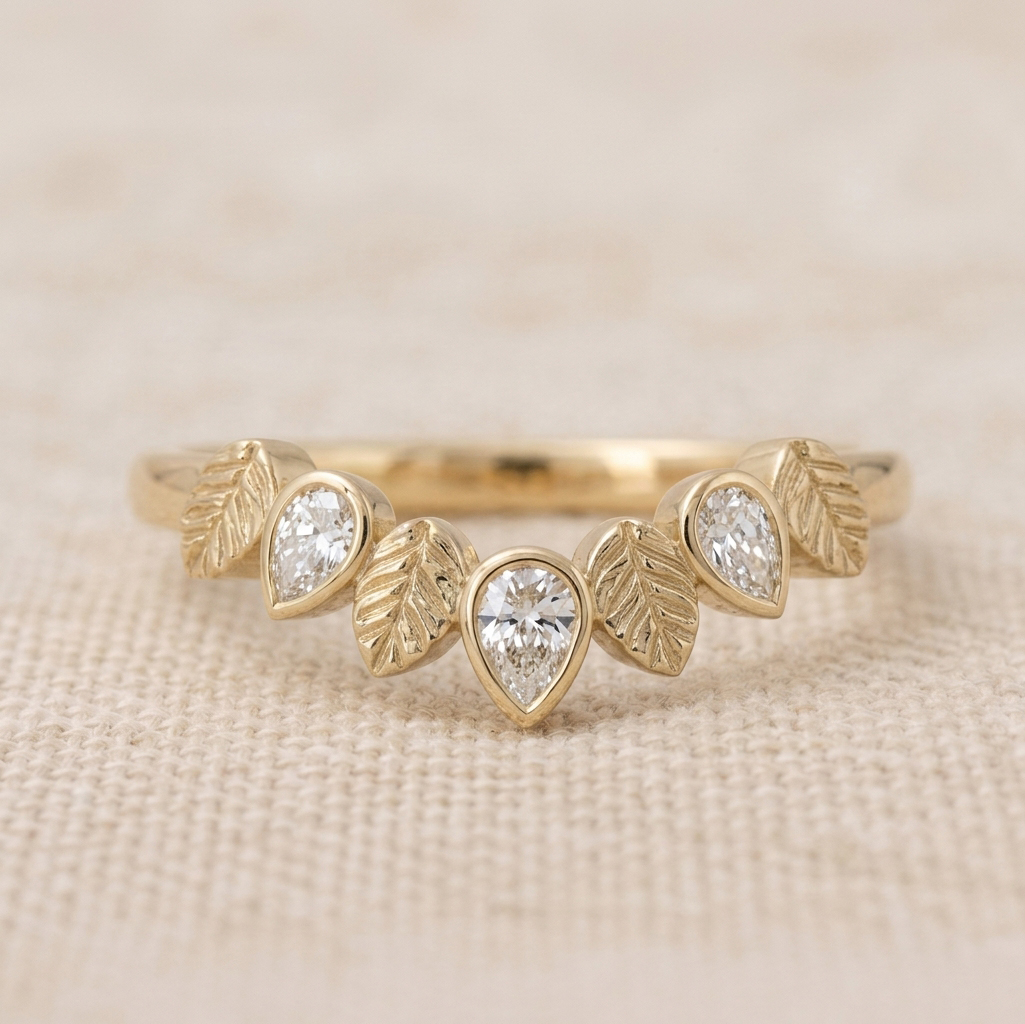
Why a straight band doesn't always fit
Many nature-inspired engagement rings have a setting that sits low, spreads sideways or is surrounded by leaves, petals or wings. Put a plain straight band next to one and it often leaves a gap, or pushes the engagement ring to tilt. A curved or contour band is shaped to follow the outline of the setting, so the two rings sit flush and read as one.
Curved vs contour bands
A curved band has a gentle arc or V in the centre that sweeps around the stone. A contour band is shaped more closely to one particular ring, following every curve of its setting. Curved bands suit many rings; contour bands are usually made to match a specific engagement ring.
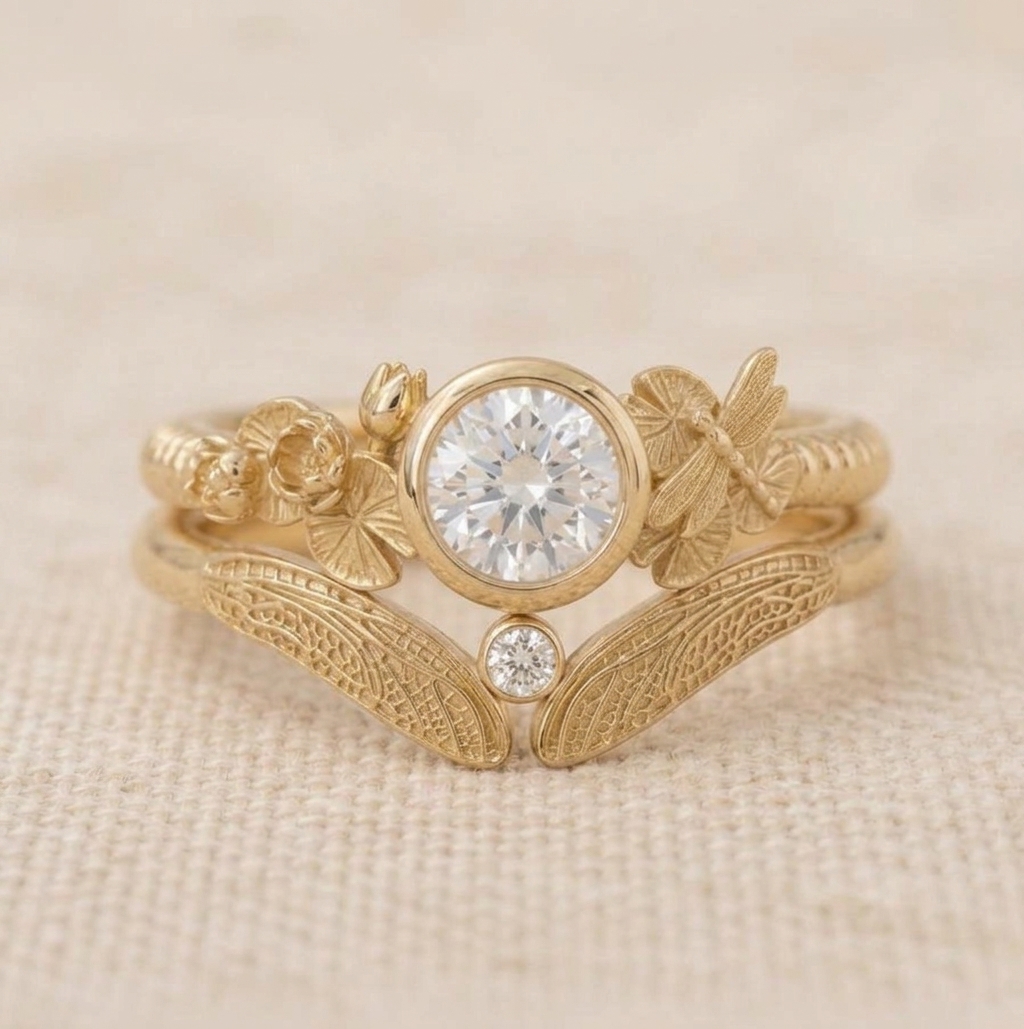
Letting nature shape the band
A shaped band is a chance to continue the story of your engagement ring. My Garland band wraps leaves and pear-shaped diamonds around a solitaire, while the Dragonfly Wing Band curves like a wing beside the Lily & Dragonfly ring. The band becomes part of the design rather than an afterthought.
How to choose the right one
Look at how your engagement ring sits from the side: how low the stone is, and how far the setting spreads. Think about whether you want a perfect flush fit or a little breathing space between the rings, and whether you'll ever wear the band on its own. A curved band can look striking alone; a tight contour band is usually worn as a pair.
Can I have one made for my ring?
Yes. If your engagement ring came from elsewhere, I can design a band shaped to fit it, in recycled yellow or unplated white gold. Everything is arranged remotely: you send photos and measurements, and I share digital previews until the fit is right.
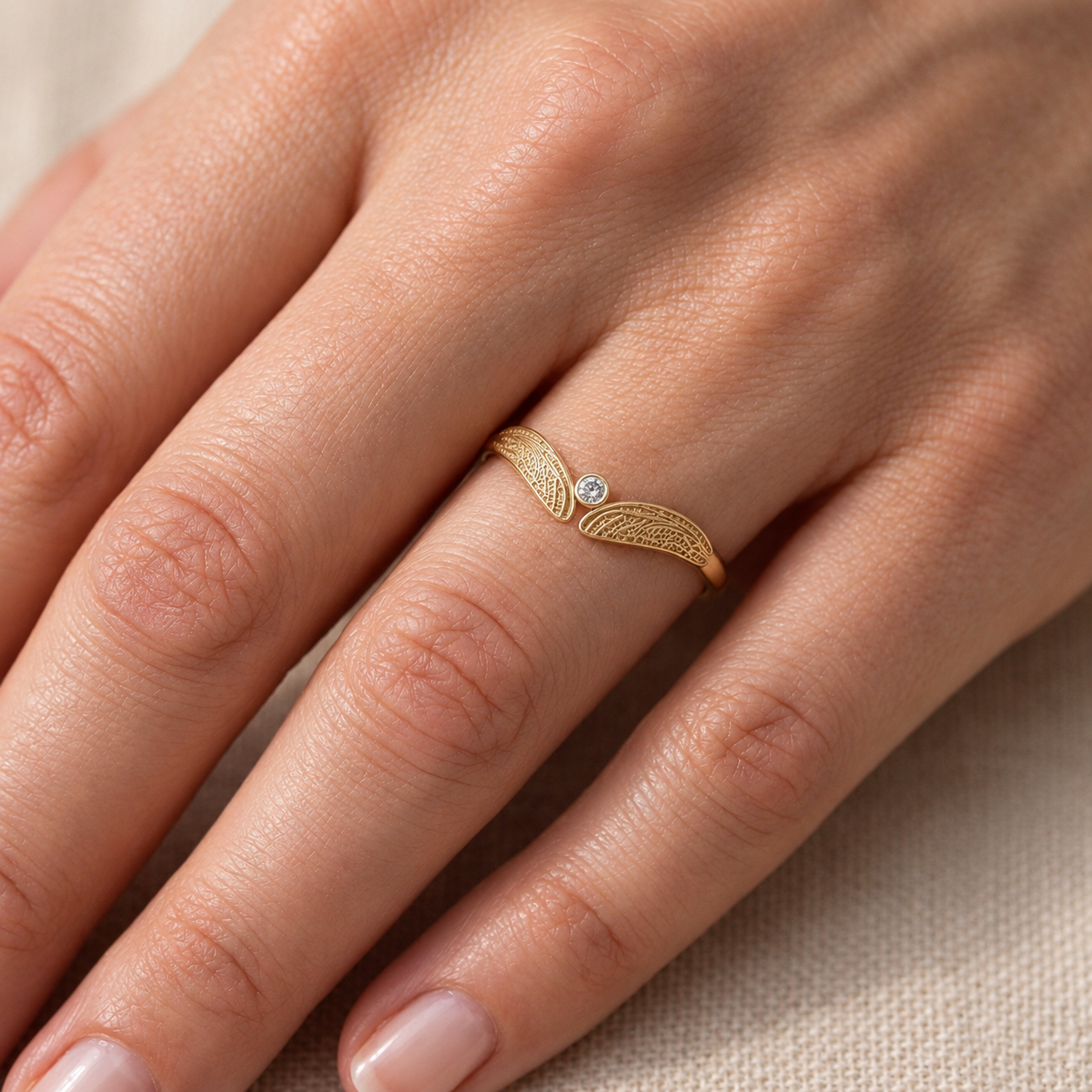
Find your pair
Shaped wedding bands, made in Cornwall from recycled gold.